Working Preview V64N — First Complete Museum Exhibit
Complete museum exhibit · Edge loops

Nail Biting

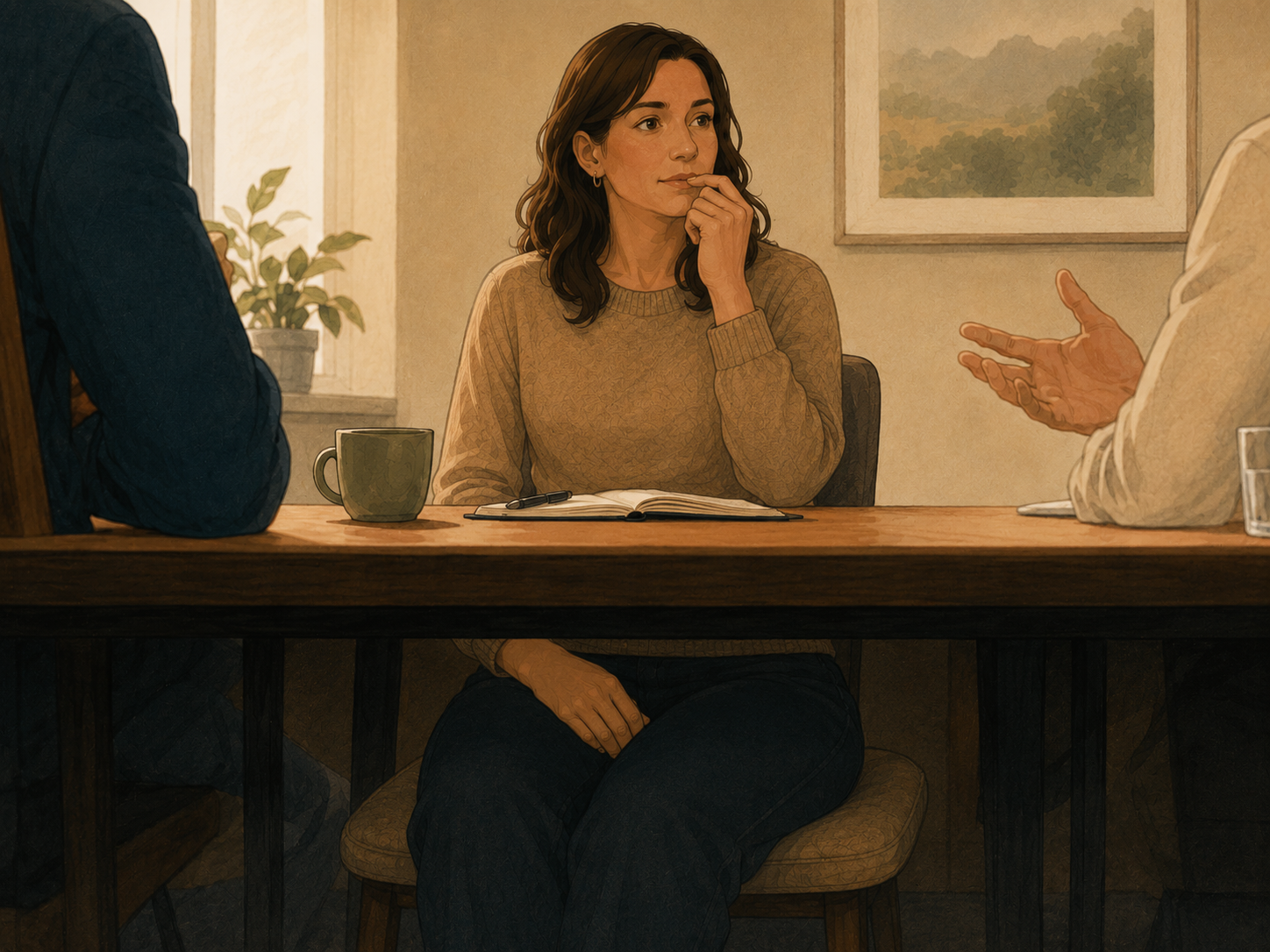
The person is listening. Under the table, the hands are already searching.

A familiar hand-to-mouth behavior becomes easier to understand when we follow the tiny signal the nervous system is trying to finish.

Illustration of a composed person at a meeting while their hidden hands move beneath the table
Recognition scene

The meeting continues. So does the loop.

The person is listening. Under the table, the hands are already searching.

A thumb moves across the edge of an index fingernail. It finds a rough place that was not important a second ago. Now it is difficult to ignore. The finger rises. The tongue checks the edge, almost like confirming the target. The teeth find it.

There is a tiny resistance. Then a soft give.

For half a second: smooth, resolved, done.

Then awareness arrives. The bite went a little too deep. There is a sting, a flash of regret, and the hand disappears beneath the table again. Above it, the person keeps nodding.

The evidence is visible later. The decision rarely was.

Walk through the mechanism

What happens between the edge and the relief?

Select each station. The object is small. The sequence is fast. Repetition makes the route easier to run before awareness catches up.

1

Edge noticed

A fingertip detects roughness, a snag, or a tiny mismatch. Because fingers are high-definition sensory zones, a very small boundary can become unusually loud.

What the nervous system is trying to finish

The person is usually not trying to damage the nail.

The nervous system is trying to resolve a tiny boundary that feels rough, loose, snagged, or incomplete.

The “just-right” bite

Most nail biting is surprisingly precise. The finger scans. The teeth nibble. The mouth keeps adjusting until the surface feels different.

The brain is not chasing destruction. It is chasing completion.

The relief may be only a fraction of a second: a shoulder drops, the breath changes, attention loosens. That small ending is enough for the brain to remember the route.

When the fix creates the next cue

A natural edge usually has an ending. A snag is filed. A loose piece comes away. The signal fades.

But biting can create a new jagged edge. The tongue finds it. The finger checks it. The nervous system begins another correction.

That is the turn: not bad behavior, but a self-feeding signal.

Family connections

Different target. Similar nervous-system job.

The object changes, but the sequence may still be sensation → correction → completion.

Cuticle picking

A raised border is tested, lifted, and made temporarily even.

Resolve the edge
Lip or cheek biting

A rough spot inside the mouth becomes a target for repeated checking.

Create smoothness
Rough-tooth checking

The tongue returns to a tiny ridge until the signal changes—or becomes louder.

Confirm the boundary
Scab picking

A healing edge feels loose or unfinished, and the correction creates a new cue.

Seek closure
Pen chewing

The mouth receives strong sensory feedback even when there is no body edge to fix.

Occupy the system
Different volume

The same basic circuitry can whisper or insist.

Move the control to see how the lived experience changes. This is a spectrum, not a diagnosis.

Loop volume

The nail does not become more important. The signal becomes harder to leave unfinished.

Mild and occasional for many. Damaging and difficult to interrupt for some. Same basic circuitry, different volume.
How commanding does the edge feel?
2
Noticeable: the hand returns during focus, driving, television, or quiet transitions.
Signals and leverage

Several kinds of signal can change the loop.

This is not a list of commands. It is a map of why different approaches may matter.

1

Understanding

Naming the pattern as a loop changes its meaning. Mystery and shame can raise threat. A workable explanation can lower it.

2

Sensory input

A competing texture, pressure, oral signal, or hand activity may temporarily change what the nervous system prioritizes.

3

The physical edge

Protecting, covering, smoothing, or otherwise changing the boundary can reduce the cue that keeps calling the system back.

4

Circuit pressure

Sleep, stress, stimulation, context, and chemistry can change how loud the signal feels before the hand ever moves.

Chemistry and circuit pressure: Brain chemistry can influence how loud or urgent a loop feels before the behavior begins. This exhibit leaves the chemistry unnamed and points forward to the Glutamate and Volume Knob galleries, where that part of the mechanism is explained in context.
Forward paths

Keep following the signal.

Nail biting sits between several rooms: the body, the mouth, the edge, the sensory gate, and the chemistry that changes loop volume.

Read the complete chapter

The Reading Room holds the manuscript preview for Nail Biting — The Hidden Hands. The book develops the full narrative and evidence; this exhibit lets you move through the mechanism.

Open the Reading Room